Travel Is More Complicated Than Ever — Here’s How AI Is Fixing It
The New Reality of Travel
There was a time when travel felt simple.
You booked a flight, reserved a hotel, maybe printed a confirmation—and that was it.
Today, travel looks very different.
Trips are often spread across multiple platforms. Flights are booked on one website, hotels on another, rental cars somewhere else. Every detail lives in a different place, and most of it ends up buried in your email inbox.
At the same time, travel itself has become more unpredictable. Delays, gate changes, weather disruptions, and last-minute updates are now part of the experience.
Planning a trip isn’t necessarily harder than it used to be—but managing it is.
The Hidden Problem: Your Trip Lives in Your Inbox
Most travelers don’t think about it this way, but your entire trip is already organized—just not in a usable format.
It’s sitting in your inbox.
Every booking confirmation, every update, every ticket is there. But instead of being structured, it’s scattered across dozens of emails.
That leads to familiar frustrations:
Searching for confirmation numbers at the airport
Digging through emails for hotel details
Missing important updates until it’s too late
This is where travel starts to feel unnecessarily stressful.
A Smarter Approach: AI-Powered Travel Planning
Artificial Intelligence is changing how people approach travel—not by replacing planning, but by organizing and enhancing it automatically.
Instead of manually building your itinerary, AI can:
Detect your bookings directly from your email
Extract key travel details like times, locations, and confirmations
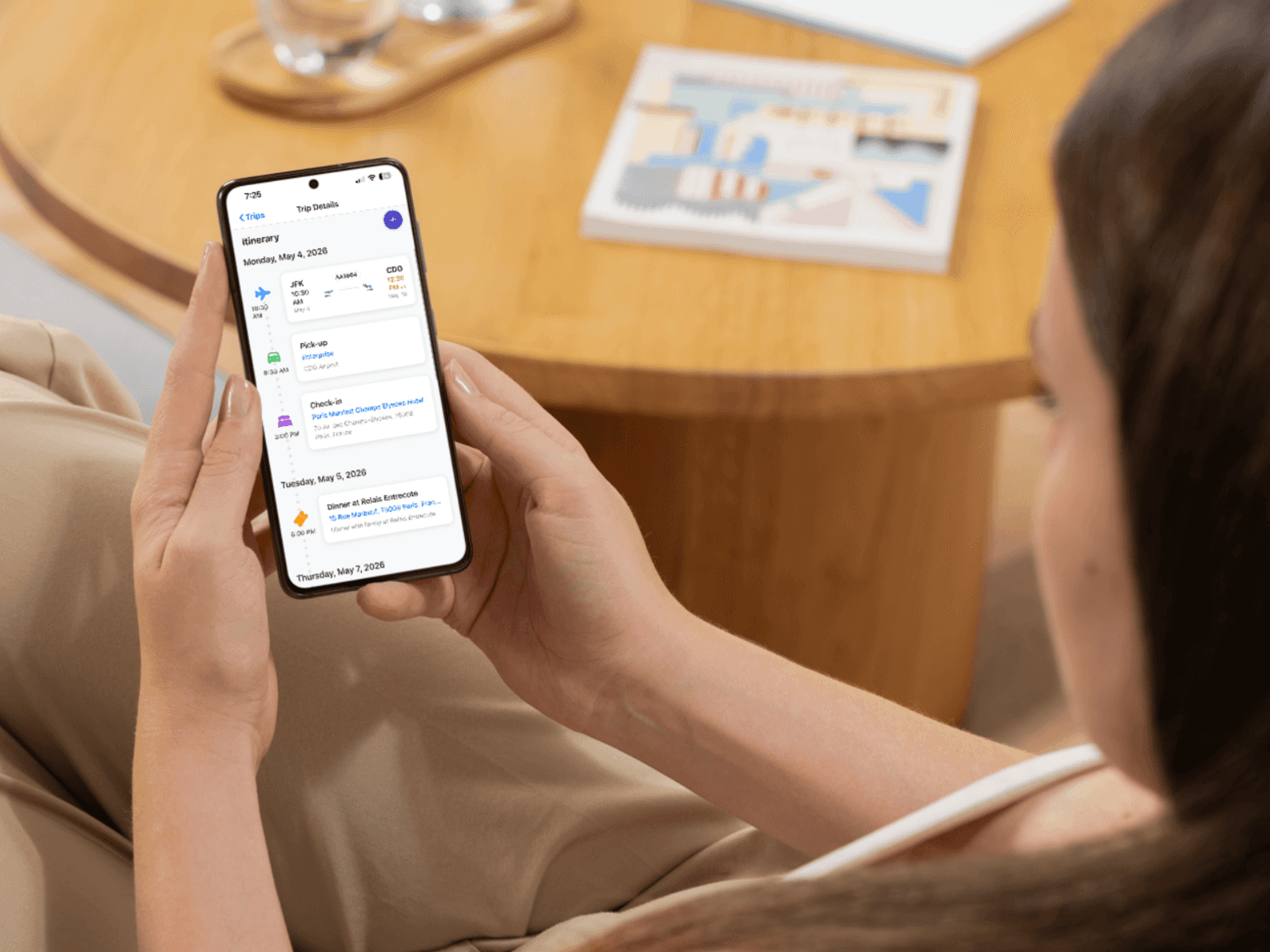
Build a clean, chronological itinerary
Continuously update your trip with real-time information
The result is simple:
What used to take hours now happens instantly—and accurately.
From Chaos to Clarity
Traditional travel apps still rely on manual input. You have to enter flight details, add hotel reservations, and keep everything updated yourself.
AI-powered platforms take a different approach.
They remove the manual work entirely.
Instead of managing your trip piece by piece, your itinerary is automatically assembled into a clear timeline—one that shows exactly what’s happening and when.
This shift from manual organization to automated structure is one of the biggest changes happening in travel today.
👉 (Internal link idea: “From Inbox Chaos to Organized Trips: The Future of Travel Planning”)
Real-Time Travel, Not Static Plans
A major challenge with travel planning is that plans don’t stay fixed.
Flights get delayed. Gates change. Weather shifts. Local conditions evolve.
Most tools show you what was planned—not what’s happening right now.
AI-driven travel platforms solve this by layering in real-time intelligence:
Flight status and delay updates
Gate and terminal changes
Weather conditions at your destination
Local travel alerts and disruptions
Instead of reacting to changes, you can stay ahead of them.
👉 (Internal link idea: “What Happens When Your Flight Gets Delayed? Here’s What Smart Travelers Do”)
Travel That Adapts to You
Another major shift is personalization.
Travel advice used to be generic—top 10 lists, popular attractions, broad recommendations.
Now, AI can tailor suggestions based on your specific trip and preferences.
That means recommendations are no longer just about the destination—they’re about you.
Instead of searching for things to do, you can receive suggestions like:
Where to eat near your hotel
The best way to get from the airport to your accommodation
Experiences that match your travel style
This is where travel begins to feel seamless.
👉 (Internal link idea: “Your Personal AI Travel Concierge: What That Actually Means”)
Why This Matters Now
The travel industry has never been more fragmented.
There are more booking platforms, more choices, and more moving parts than ever before. While this gives travelers flexibility, it also creates complexity.
As a result, the need for tools that simplify and unify the experience is growing rapidly.
AI is not just a trend—it’s becoming a foundational part of how modern travelers plan and manage their trips.
👉 (Internal link idea: “2026 Travel Trends: What Smart Travelers Are Doing Differently”)
A Better Way to Travel
This is exactly the problem Travlin was built to solve.
Instead of jumping between apps, searching through emails, and manually organizing details, Travlin brings everything together into one place.
With Travlin, your trip becomes:
Automatically organized
Easy to understand
Continuously updated
Personalized to your preferences
It’s not about adding another tool—it’s about replacing the need for multiple ones.
Travel Should Feel Effortless
The future of travel isn’t about doing more.
It’s about removing friction.
When your trip is organized, updated, and personalized automatically, you spend less time managing logistics—and more time actually enjoying the experience.
That’s where travel is heading.
Start Traveling Smarter
If you’re still managing trips manually, you’re doing more work than you need to.
AI is already changing how travel works—and the difference is immediate.
Try Travlin and experience a simpler way to travel.
👉 Your Personal AI Travel Concierge